GHK-Cu Vs Vitamin C: 70% Against 50% In 12 Weeks
A small clinical study presented at the American Academy of Dermatology compared a copper-peptide facial cream with a vitamin C cream over twelve weeks, reporting increased collagen production in 70% of the peptide group against 50% for vitamin C.
What was studied
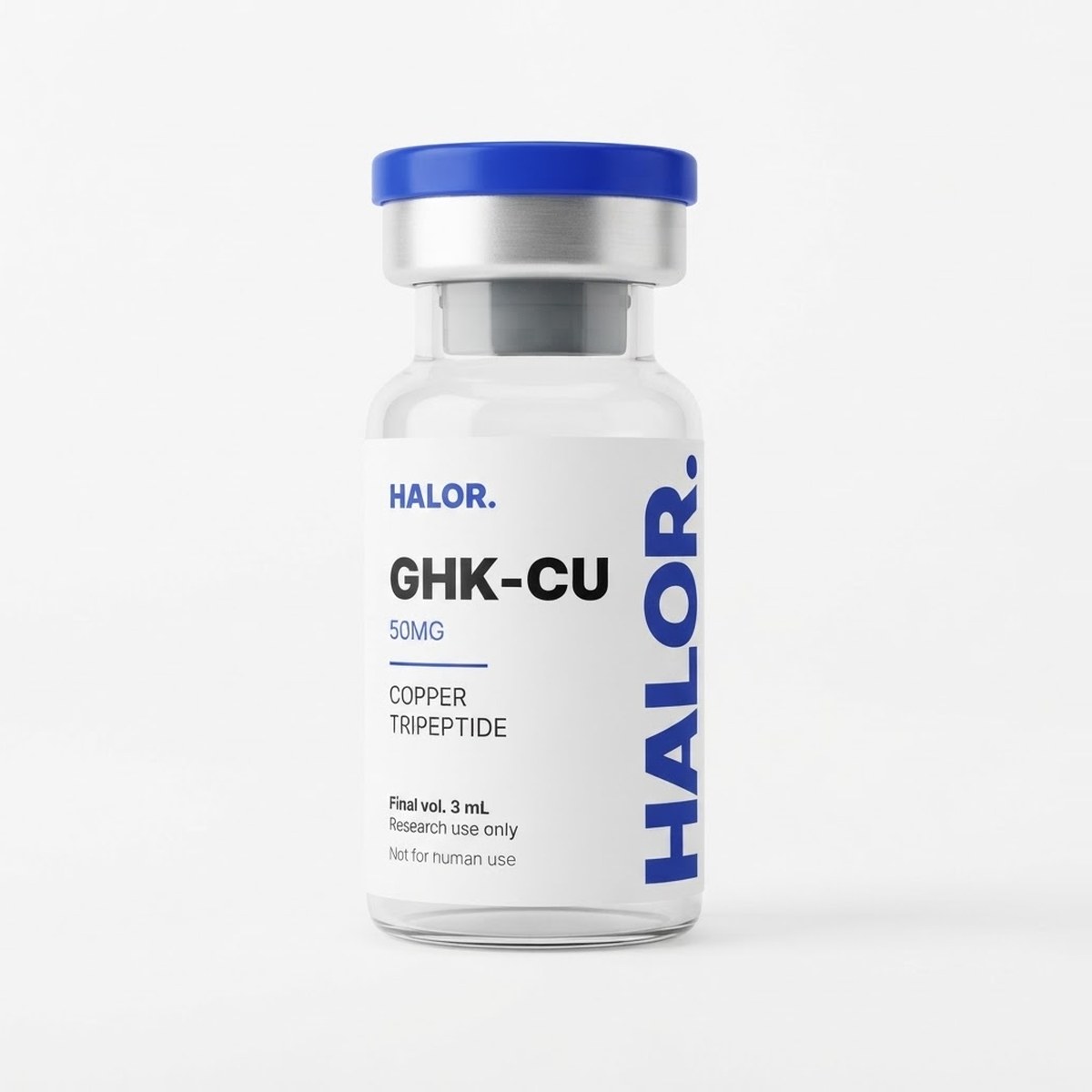
GHK-Cu is the copper complex of the tripeptide glycyl-L-histidyl-L-lysine, first isolated from human plasma in the 1970s. Leyden and colleagues tested a facial cream containing the copper peptide against a vitamin C cream, applied for twelve weeks, and measured collagen production in the skin.
What the data shows
- 70% of subjects using the copper-peptide cream showed increased collagen production, compared with 50% in the vitamin C group.
- The effect was reported at twelve weeks of daily topical use.
This result was presented as a congress abstract, not as a paper in an indexed journal, and the sample was small. It sits below peer-reviewed clinical data in the evidence hierarchy. It also describes a topical cosmetic formulation, not the lyophilized research material sold here.
Why it matters for research
The 70-versus-50 comparison is the most-quoted human number for GHK-Cu and the origin of its reputation in skin research. The broader literature on GHK-Cu covers gene-expression profiling, wound models and copper delivery. For laboratories working on extracellular matrix biology, a peptide of confirmed identity and copper content is the starting requirement.
Leyden J, Stephens T, Finkey MB, Appa Y, Barkovic S. Skin care benefits of copper peptide containing facial cream. Abstract, American Academy of Dermatology 60th Annual Meeting, 2002. Not indexed in PubMed.
Bibliographic data retrieved from PubMed.
Summary prepared for laboratory research context. Halor products are sold for research use only and are not for human or veterinary use. Nothing on this page is medical advice.